
When 'Choice' Leaves No Choice: The Stakes for Rural Schools
Missouri's new A-F school grading system is being presented as a way to give parents clearer information about school performance. Transparency matters. Parents deserve to understand how schools are doing, and schools should be accountable for student outcomes.
In small rural districts, however, public labeling does more than inform. It shapes decisions, shifts enrollment, and sets off consequences that rural schools are not build to absorb.
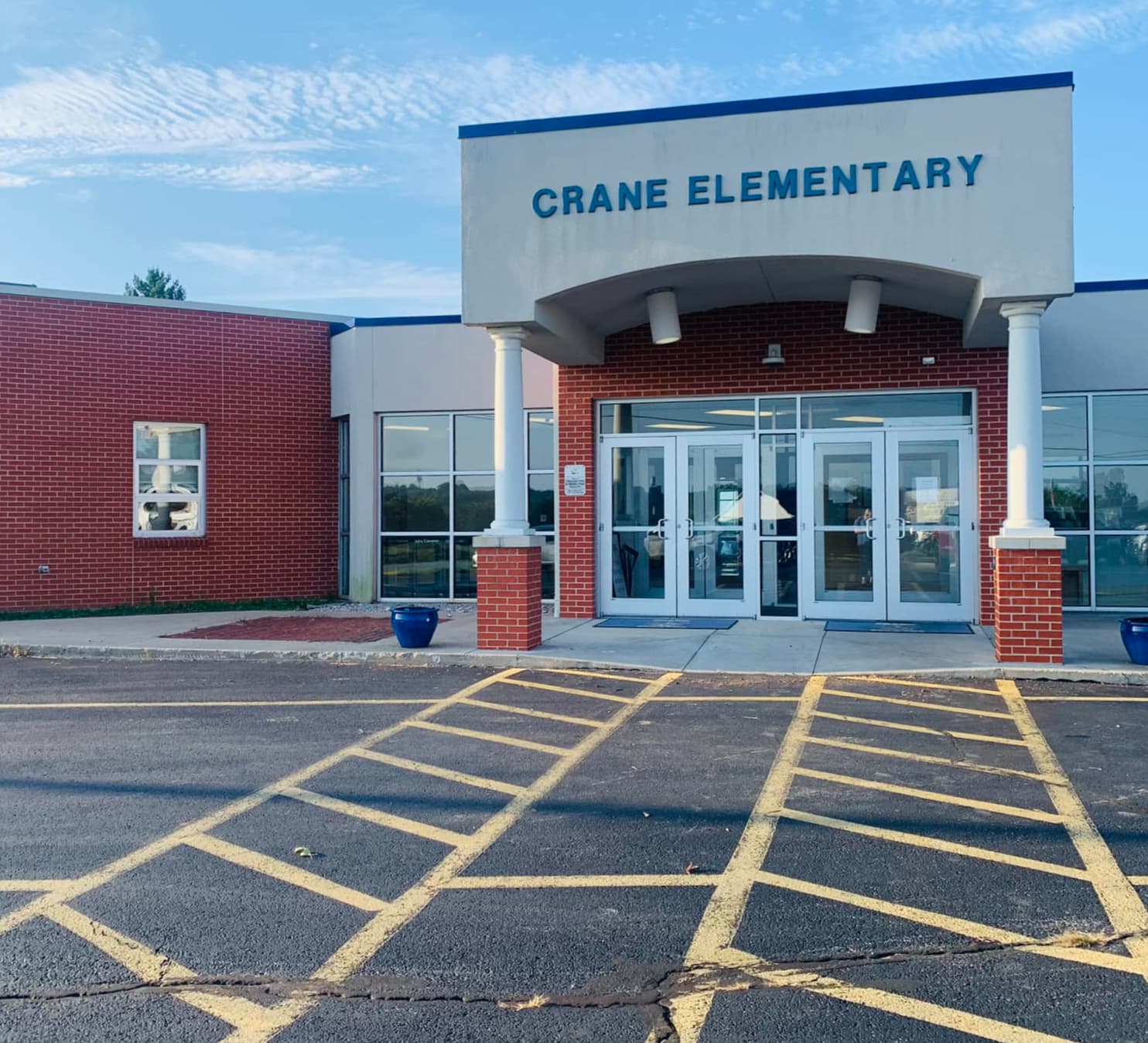
Consider a realistic scenario for a district like Crane, Galena, or Hurley.
If a low grade is assigned and a significant number of families respond by enrolling their children in private schools in surrounding areas, the impact is immediate. Missouri school funding follows students. A sharp drop in enrollment quickly translates into a sharp drop in revenue.
What does not drop are fixed costs. The building still has to be heated and maintained. Buses still cover wide rural routes. Special education services are still required by law. Insurance, utilities, food service, technology, and transportation do not scale down neatly with enrollment.
Cuts come fast, and they are not strategic. Teaching positions are eliminated. Support staff are reduced. Remaining teachers take on larger class sizes and additional responsibilities. Programs that keep students engaged - athletics, electives, career pathways, arts - are trimmed or removed.
Families notice the decline and make another decision. More leave.
This is how small systems collapse.
If enrollment falls far enough, the district does not 'adjust'. It closes. The remaining students are forced to find another school, often many miles from home. Long bus rides become routine. Families lose a local institution they depended on. Educators lose their jobs, their stability, and in many cases their reason to stay in the community.
Once a rural school closes, it does not reopen.
The Pressure on Educators
These dynamics land on a workforce already stretched thin. Many teachers in Missouri earn around $40,000 a year while carrying significant student loan debt. They face increasing expectations, constant policy shifts, public scrutiny, and staffing shortages - often while teaching multiple subjects or grade levels.
Public grading and enrollment instability make the profession less appealing and more exhausting. Burnout increases. Turnover rises. Recruiting new teachers becomes harder, especially in rural districts where staffing pools are already limited. None of this improves student outcomes. It makes sustaining them harder.
Unequal standards, unequal risks
Private schools may opt into the A-F grading framework if they choose. Public schools do not have that option. They must serve every student, test nearly all of them, and accept the public label that follows.
When families leave public schools, private schools can still benefit from tax-funded credits and incentives without facing the same participation requirements or consequences tied to enrollment shifts. The standards are different, and so are the risks.
Open enrollment and the case being built
Missouri does not currently have a statewide open enrollment law. For the past five years, such bills have repeatedly passed the House before stalling in the Senate.
That context matters.
Public grading systems do not exist in isolation. They influence perception and behavior. When schools are labeled and families respond by leaving, those outcomes become evidence. The discussion shifts away from whether schools are adequately supported and toward whether parents should be allowed to go elsewhere.
For rural districts, the concern is not that open enrollment exists today. The concern is that current politics are creating the conditions used to argue for it tomorrow.
Pressure layered on top of a broken system
This conversation does not begin with letter grades or enrollment policy.
Crane.news has previously reported on Missouri's school funding system - a framework built in 2005 that has failed to keep pace with inflation, rising operational costs, and the realities of modern classrooms. The state's own numbers acknowledge that what Missouri considers 'adequate' is funding falls thousands of dollars short of what it actually costs to educate a student today.
Small rural districts already operate at a disadvantage. Missouri's continued reliance on average daily attendance rather than enrollment penalizes schools for absences they cannot control, making funding less predictable and less stable. Aging facilities, limited course offerings, and thin staffing are not management failures - they are symptoms of a system stretched beyond its limits.
Layering public letter grades, enrollment pressure, and unequal accountability standards on top of that system does not fix it. It magnifies it.
When a school is labeled without first being adequately funded, the grade reflects resource gaps as much as student performance. When families respond by leaving, the movement itself becomes the focus, rather than the conditions that made the school vulnerable in the first place.
This is how Missouri ends up addressing education from every angle except the one that matters most.
Why rural schools bear the cost
Large districts can lose students and remain viable. Rural districts cannot. Losing even a small number of students can trigger staffing cuts, program loss, and long-term decline. Rural schools do not gradually downsize. They cross thresholds.
Schools in small towns are not just service providers. They are major employers, community centers, and anchors that keep families in place. When policy treats them as competitors instead of infrastructure, consolidation becomes inevitable.
Governor Mike Kehoe has said clearer accountability helps parents make better decisions. In rural Missouri, once a school reaches a certain point, there are no decisions left to make. The system resolves itself through closure, displacement, and job loss.
That outcome is not about educational quality. It is about capacity.
Doing everything except fixing the problem
What Missouri has shown, repeatedly, is a willingness to change how education is measured, labeled, compared, and pressured - without addressing the conditions that shape outcomes.
The state revises accountability systems. It debates enrollment flexibility. It shifts responsibility to families and local districts.
What it does not do, at the same scale or urgency, is modernize the funding structure rural schools depend on to survive.
Rural districts are asked to meet the same expectations with fewer resources, fewer staff, longer transportation routes, and less financial flexibility. Teachers are asked to shoulder growing demands while earning wages that make long-term sustainability difficult. Schools are expected to absorb enrollment losses that would cripple any small organization.
When strain becomes visible, the response is rarely investment. It is redesign. And so, Missouri continues to act on education instead of fixing it.
Until funding, staffing, and structural realities are addressed directly, no grading system or enrollment policy will improve outcomes. They will only redistribute the damage - and in rural communities, that damage is swift and permanent.
Rural districts are not asking to avoid accountability. They are asking for a system that gives them a fair chance to meet it.
Because when a school like Crane, Galena, or Hurley disappears, the loss is not abstract. It is measured in displaced students, lost jobs, and communities that never fully recover.